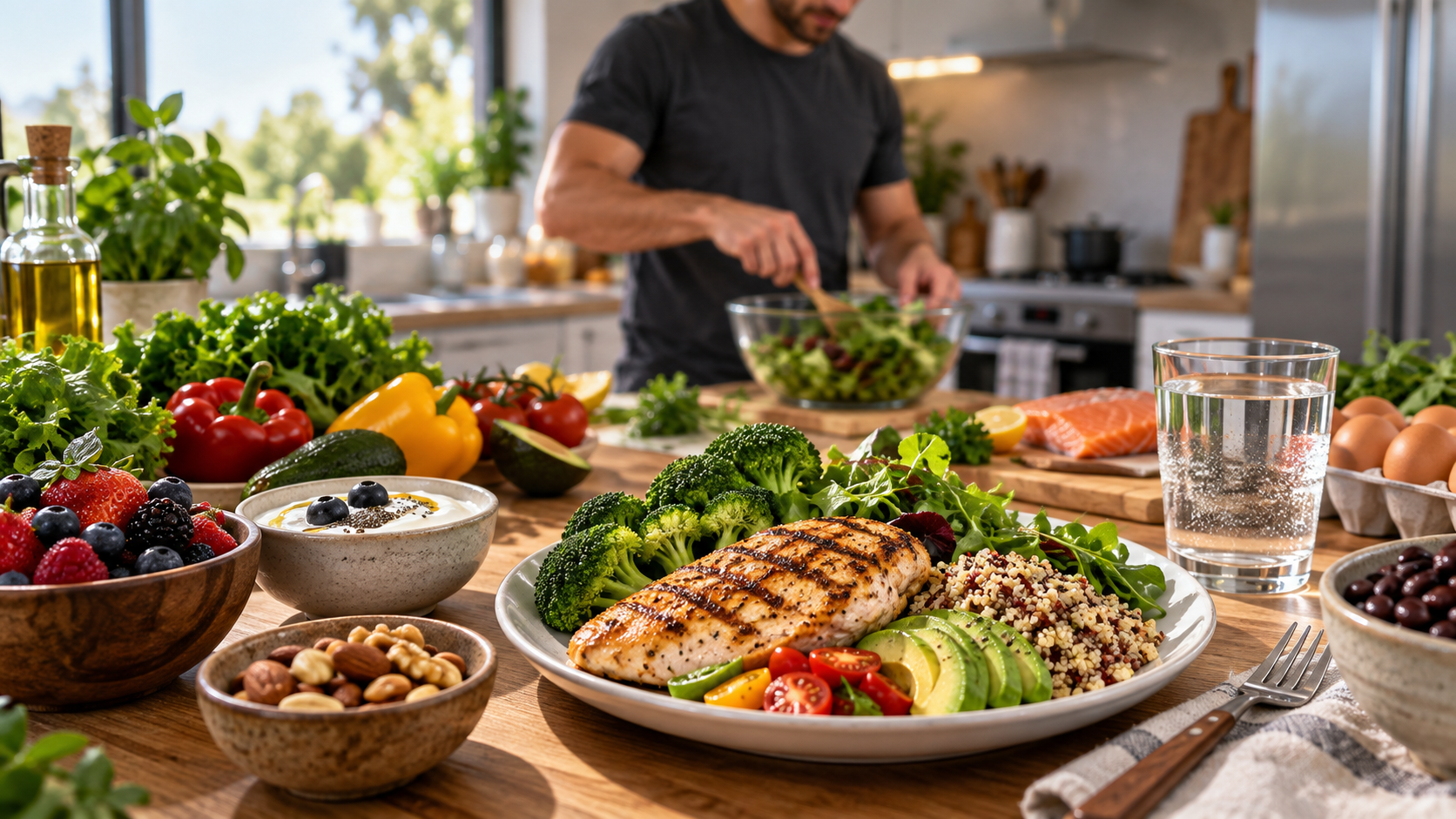
Losing weight does not depend on finding a “magic” food that makes body fat disappear. However, some foods can make the process easier because they provide important nutrients, help control hunger, and can be easier to incorporate into a balanced diet.
The first thing to understand is that losing weight generally requires an energy deficit, meaning that you consume less energy than your body uses over time.
From there, choosing the right foods can make maintaining that deficit easier and more sustainable.
Important: This article is for general educational purposes and does not replace personalized advice, diagnosis, or treatment from a doctor, registered dietitian, or other qualified healthcare professional.
What Do Weight-Loss Diets Have in Common?
There are many different diets that claim to help people lose weight. Some of them are very different from one another, but many share one characteristic: they encourage eating more whole or minimally processed foods.
This does not mean that every processed food is unhealthy or that processed foods need to be completely eliminated from your diet.
The concern arises when highly processed foods make up a large portion of the diet and make it easier to consume more energy than the body needs.
Why Can Ultra-Processed Foods Make Weight Management More Difficult?
Ultra-processed foods often have characteristics that can make it easy to consume large amounts of them.
They are often:
- Convenient.
- Easy to find.
- Quick to prepare or eat.
- Highly palatable.
- Relatively inexpensive.
Some products are also formulated with combinations of flavors and textures that make them particularly appealing, which may encourage people to continue eating even after consuming a substantial amount.
For this reason, reducing the frequency of certain ultra-processed foods may be a useful strategy for some people who are trying to manage their weight.
What Does Research Say?
A controlled clinical trial published in 2019 compared the effects of an ultra-processed diet with a minimally processed diet.
Participants followed each type of diet for two weeks before switching to the other diet.
The researchers designed the diets to be similar in several nutritional characteristics, while the main difference was the degree to which the foods were processed.
The researchers found that participants consumed more calories and gained weight on average during the ultra-processed diet. During the minimally processed diet, participants consumed fewer calories and lost weight on average.
One difference observed during the study was the speed at which participants ate. They tended to eat faster while consuming the ultra-processed diet.
The study is particularly interesting because it suggests that the degree of food processing may influence how much people eat. However, this does not mean that every processed food causes weight gain or that food processing is the only factor responsible.
Does This Mean You Should Eliminate Processed Foods?
No.
It is important to avoid extreme conclusions.
You do not need to think of processed foods as “the enemy,” nor do you necessarily need to eliminate them completely.
Some processed foods can be part of a healthy eating pattern. Food processing can also serve useful purposes, such as improving food safety, extending shelf life, or making certain foods more convenient.
The important distinction is between occasionally including certain processed foods and making ultra-processed foods the foundation of your diet.
What Are the Best Foods for Weight Loss?
There is no single food that directly causes fat loss.
In general, foods that may be especially useful when managing body weight are those that provide important nutrients and can help you feel satisfied without contributing excessive amounts of energy.
These include:
Lean Protein Sources
Protein-rich foods can help support muscle maintenance and may increase feelings of fullness.
Examples include:
- Chicken.
- Turkey.
- Fish.
- Eggs.
- Seafood.
- Lean meats.
- Yogurt and other dairy products.
- Beans and other legumes.
Vegetables
Vegetables are generally relatively low in calories compared with their volume and provide fiber, vitamins, minerals, and other nutrients.
Examples include:
- Broccoli.
- Spinach.
- Lettuce.
- Tomatoes.
- Carrots.
- Bell peppers.
- Cauliflower.
- Zucchini.
Including vegetables in your meals can increase the volume of your food without adding excessive amounts of calories.
Fruits
Fruit can also be part of an eating pattern designed to support weight loss.
Fruits provide water, fiber, vitamins, minerals, and other beneficial compounds.
Examples include:
- Apples.
- Oranges.
- Strawberries.
- Blueberries.
- Bananas.
- Pears.
- Peaches.
There is generally no need to eliminate fruit simply because it contains naturally occurring sugars.
Legumes
Lentils, beans, chickpeas, and other legumes provide plant-based protein and fiber.
They can also be filling and can fit into many different types of eating patterns.
Healthy Sources of Fat
Dietary fat is also part of a balanced diet.
Some sources of unsaturated fats include:
- Olive oil.
- Avocado.
- Nuts.
- Seeds.
- Certain types of fish.
Although these foods can be nutritious, it is important to remember that dietary fat is energy-dense. Portion sizes can therefore still matter when weight loss is the goal.
Can You Eat Unlimited Amounts of Minimally Processed Foods?
No.
This is another important point.
The fact that a food is natural or minimally processed does not mean that you can eat unlimited amounts of it without considering portions.
For example, nuts and olive oil can be nutritious foods, but they also contain a significant amount of energy in relatively small portions.
Food quality matters, but the total amount you consume matters as well.
Why Can Minimally Processed Foods Be Helpful?
One possible advantage of minimally processed foods is that many of them may take longer to eat and can be more filling.
Consider the difference between eating a meal containing vegetables, legumes, and a protein source and quickly consuming certain highly processed foods that are very energy-dense.
The experience can vary depending on the food and the individual.
For this reason, it is not necessary to classify every food as simply “good” or “bad.”
Instead, the goal is to build an eating pattern that helps you manage your energy intake while providing the nutrients your body needs.
What Foods Should You Limit When Trying to Lose Weight?
You do not necessarily need to completely ban specific foods. However, it can be helpful to limit frequent consumption of products that provide large amounts of energy while offering relatively little nutritional value.
Examples may include:
- Some pastries and baked sweets.
- Cookies.
- Candy and other sweets.
- Sugar-sweetened beverages.
- Some fast-food products.
- Highly processed snacks.
- Some fried foods.
This does not mean you can never eat these foods.
A sustainable eating pattern can occasionally include foods you enjoy, as long as your overall diet is balanced and your portions are appropriate for your individual needs.
Weight Loss Depends on Your Overall Eating Pattern
There is no single perfect diet for everyone.
A diet based primarily on minimally processed foods can be an excellent option, but it is still possible to have an unbalanced diet even when eating mostly minimally processed foods if portions and the overall composition of the diet do not meet your individual needs.
That is why it is important to consider not only which foods you eat, but also the portions, your nutritional requirements, your physical activity level, and your goals.
Conclusion
The best foods for weight loss are not foods that magically burn fat.
In general, it can be helpful to build your diet around nutritious protein sources, vegetables, fruits, legumes, whole grains, and healthy sources of dietary fat, while adjusting portions to your individual needs.
Reducing frequent consumption of ultra-processed foods may be a useful strategy because some of these products can be very easy to overconsume.
However, you do not need to eliminate them completely.
The goal is to develop a balanced, nutritious, and sustainable eating pattern that you can maintain over the long term.
There is no magic food for weight loss. What matters is the overall pattern of your diet, the amount of energy you consume, your activity level, and the habits you can consistently maintain.
Frequently Asked Questions
What is the best food for weight loss?
There is no single food that causes weight loss on its own. Foods rich in nutrients, protein, and fiber can make it easier to maintain a balanced diet and manage hunger.
Do ultra-processed foods cause weight gain?
Not every ultra-processed food automatically causes weight gain. However, some ultra-processed foods can be very easy to consume in large quantities, which may make it more difficult to manage overall energy intake.
Do I have to eliminate carbohydrates to lose weight?
No. Carbohydrates can be part of a healthy and balanced diet. Overall energy intake, food quality, physical activity, and other factors all play a role in weight management.
Can I eat fruit if I want to lose weight?
Yes. Fruit can be part of a weight-loss diet and provides fiber, vitamins, minerals, water, and other nutrients.
Can I eat processed foods while trying to lose weight?
Yes. You do not necessarily need to eliminate processed foods completely. What matters is the overall quality of your diet, portion sizes, and total energy intake.
Do minimally processed foods guarantee weight loss?
No. Food quality is important, but portion sizes and individual energy needs also matter. Weight loss generally requires a sustained energy deficit.
Medical Disclaimer: The information provided in this article is for general educational and informational purposes only. It is not intended to replace professional medical advice, diagnosis, or treatment. Nutritional needs vary depending on factors such as age, sex, health status, medications, activity level, and individual goals. If you have a medical condition or need a personalized weight-loss plan, consult a qualified healthcare professional before making significant changes to your diet or physical activity.
Sources
- Centers for Disease Control and Prevention (CDC)
- National Institute of Diabetes and Digestive and Kidney Diseases (NIDDK)
- National Institutes of Health (NIH)
- Hall KD, et al. Ultra-Processed Diets Cause Excess Calorie Intake and Weight Gain: An Inpatient Randomized Controlled Trial of Ad Libitum Food Intake. Cell Metabolism, 2019.