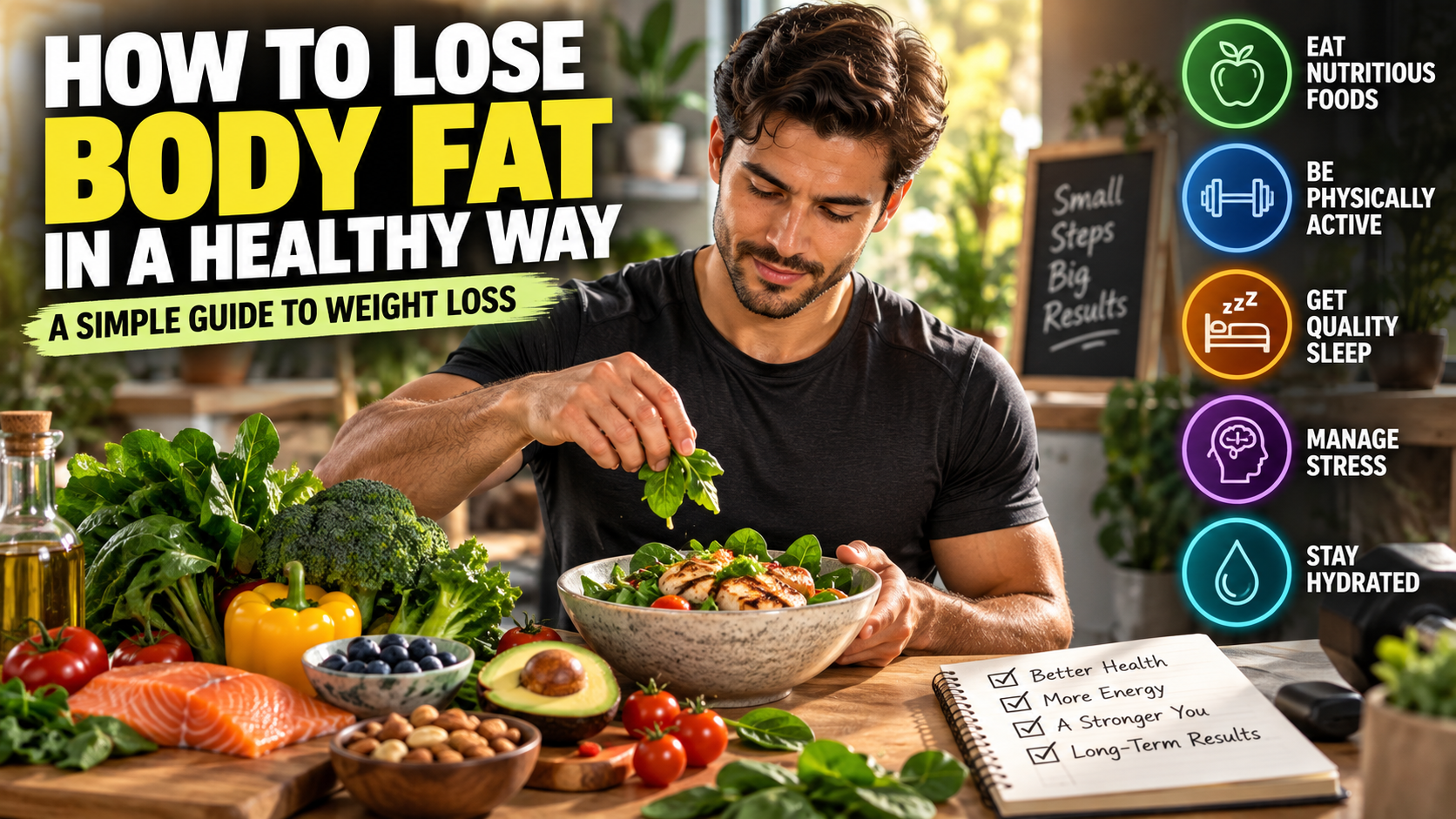
Losing body fat can be simple, but it is not always easy. We are constantly exposed to hundreds of different recommendations about dieting, exercise, and weight loss. The problem is that too much information can sometimes create more confusion than clarity.
In this article, we will explain the basic principles you should understand if your goal is to lose body fat, the most common mistakes people make, and how to develop habits that you can maintain over the long term.
Important: This article is intended for general educational purposes and does not replace personalized advice, diagnosis, or treatment from a doctor, registered dietitian, or other qualified healthcare professional.
How Does the Body Actually Lose Fat?
One of the most common misconceptions is that we can choose exactly where our body loses fat.
For example, doing many abdominal exercises can strengthen your abdominal muscles, but it does not mean that you will specifically lose belly fat. The same applies to squats and fat around the thighs.
When a person loses body fat, the body determines where stored energy is mobilized. Genetics, sex, hormones, and other factors can influence how body fat is distributed and lost.
Therefore, if your goal is to reduce fat in a specific area, you generally need to work toward reducing overall body fat.
Where Does the Body Lose Fat First?
This can be different for every person.
Some people may notice changes in their face, arms, or chest first, while others may notice changes in different areas. There is no universal order that determines exactly where you will lose fat first.
For this reason, not seeing immediate changes in the area you are most concerned about does not necessarily mean that your efforts are not working.
Patience and consistency are important.
What Is a Calorie Deficit?
Once we understand that we cannot choose exactly where our body loses fat, an important question comes up:
What do we need to do to lose weight?
One of the main concepts is an energy deficit, commonly referred to as a calorie deficit.
Our bodies require energy to maintain functions such as breathing, regulating body temperature, moving, and carrying out the many processes necessary for normal bodily function.
Food and beverages provide energy, while the body uses energy throughout the day.
When you consistently consume less energy than your body uses over time, an energy deficit is created, which can contribute to weight loss.
However, you do not necessarily need to turn your diet into an obsession with numbers.
Do You Need to Count Every Calorie?
Not necessarily.
Calorie calculators, smartwatches, and cardio machines can provide estimates, but they cannot determine your exact daily energy expenditure with complete accuracy.
Tracking calories can be a useful tool for some people. For others, it may be difficult to maintain or may lead to excessive concern about food.
The goal is to find an approach that you can follow in a healthy and sustainable way.
How Can You Estimate Your Calorie Needs?
You can use a calorie or energy-needs calculator to get an initial estimate.
These calculations commonly use information such as:
- Age
- Sex
- Weight
- Height
- Physical activity level
Remember that the result is only an estimate.
Everyone responds differently, so monitoring changes in body weight, measurements, physical performance, and how you feel can help you understand whether your approach is working.
Exercise and Fat Loss
Exercise is an important tool for improving health and can contribute to weight management.
However, there is a common misconception that doing more and more cardio will automatically make you lose fat faster.
It does not always work that way.
Do You Need to Do a Lot of Cardio?
Imagine that a person starts exercising and, with the goal of losing weight quickly, decides to add more and more cardio sessions.
If the amount of exercise becomes excessive, it can lead to greater fatigue and reduce the energy available for other daily activities.
The goal should not be to exhaust yourself every day.
Instead, try to develop an exercise routine that you can maintain consistently.
The Importance of Staying Active Throughout the Day
The exercise you do at the gym is not the only physical activity that matters.
Walking, standing while working, climbing stairs, doing household chores, and moving throughout the day are also forms of physical activity.
For example, someone who works on their feet and walks for several hours may have a very different daily activity level from someone who spends most of the day sitting at a desk.
Simple Changes That Can Help
You do not always need to add hours of cardio.
You can start with simple changes such as:
- Taking the stairs when possible.
- Walking more throughout the day.
- Making short trips on foot when practical.
- Getting up and moving regularly if you work sitting down.
- Looking for more opportunities to move during the day.
These habits can help you develop a more active lifestyle.
Nutrition for Losing Body Fat
Nutrition is another important part of the process.
The three main macronutrients are protein, carbohydrates, and fat.
All three have important functions in the body, so completely eliminating one of them is not necessary for losing body fat.
The goal is to develop a balanced eating pattern that fits your individual needs.
Protein and Fat Loss
If you perform strength training and are trying to lose body fat, consuming enough protein can help support the maintenance of muscle mass.
A commonly used reference for people who perform resistance training is approximately 1.6 to 2 grams of protein per kilogram of body weight per day, although individual needs can vary.
For example, a person weighing 80 kg would have a reference range of approximately 128 to 160 grams of protein per day.
Protein can come from foods such as:
- Eggs
- Chicken
- Fish
- Tuna
- Dairy products
- Beans and other legumes
- Lean meats
- Other protein-rich foods
You do not necessarily need to consume exactly the same amount every day, and supplements are not required if you can meet your nutritional needs through food.
Carbohydrates: Do You Need to Eliminate Them?
No.
Carbohydrates are an important source of energy and can absolutely be part of a balanced eating pattern designed to support weight loss.
One common mistake is believing that completely eliminating carbohydrates is necessary to lose weight.
Foods such as rice, potatoes, bread, oats, fruits, and other carbohydrate-containing foods can all be part of a balanced diet.
Choosing fiber-rich foods such as whole grains, fruits, vegetables, and legumes can also contribute to a nutritious eating pattern and may help with feelings of fullness.
You do not need to eliminate a food simply because it contains carbohydrates.
Fat: Your Body Still Needs It
The word “fat” may seem contradictory when your goal is to lose body fat.
However, eating dietary fat does not automatically cause an increase in body fat.
Dietary fats perform important functions in the body and are part of a balanced eating pattern.
Sources of unsaturated fats include:
- Olive oil
- Nuts
- Seeds
- Avocado
- Some types of fish
At the same time, it is generally advisable to limit frequent consumption of highly processed foods and products containing high amounts of saturated and trans fats.
The goal is not to eliminate all dietary fat, but to prioritize nutritious sources and pay attention to portions as part of an overall balanced diet.
Common Mistakes When Trying to Lose Body Fat
When someone wants to lose weight, it can be tempting to follow extreme strategies.
Some common mistakes include:
Trying to Lose Weight Too Quickly
Wanting immediate results can lead to overly restrictive diets that are difficult to maintain.
Exercising Too Much
More exercise does not necessarily mean better results. Rest and recovery are also important parts of a healthy exercise routine.
Eliminating Entire Food Groups
You do not need to completely eliminate carbohydrates or fats to lose body fat.
Becoming Obsessed With Calories
Tracking calories can be useful for some people, but it should not become a constant source of anxiety or concern about food.
Changing Everything at Once
Trying to completely change your diet, exercise routine, sleep schedule, and every other habit at the same time can make the process difficult to maintain.
How to Build Habits You Can Maintain
Losing body fat should not be viewed simply as following a diet for a few weeks.
The goal is to develop habits that can be maintained over the long term.
You can start with small changes such as:
- Eating nutritious foods more often.
- Getting enough protein.
- Gradually increasing physical activity.
- Performing strength exercises.
- Getting adequate sleep.
- Reducing frequent consumption of highly processed foods.
- Following an eating pattern that you can actually enjoy.
You do not have to do everything perfectly.
Consistency over months is often more important than following a “perfect” routine for only a few days.
Summary: The 3 Foundations of Fat Loss
1. Create an Energy Deficit
To lose body weight, you generally need to maintain an energy deficit over time.
2. Stay Physically Active
Strength training, cardiovascular exercise, and maintaining an active lifestyle can contribute to weight management and overall health.
3. Follow a Balanced Diet
You do not need to eliminate entire food groups. A varied eating pattern that includes adequate protein, fruits, vegetables, fiber-rich foods, and nutritious sources of fat can help you build sustainable habits.
Conclusion
Losing body fat can seem complicated when we are constantly exposed to conflicting information on social media.
But you do not need an extreme strategy to get started.
Learn gradually, establish realistic habits, and give your body time to respond.
Do not try to be perfect from the first day. Instead, focus on finding an approach that you can maintain.
Patience and consistency are important parts of the process.
Losing body fat can be simple. The difficult part is maintaining healthy habits for long enough to see meaningful results.
Frequently Asked Questions
Can You Lose Fat Only From Your Belly?
You cannot choose exactly where your body will lose fat. Abdominal exercises can strengthen your abdominal muscles, but reducing body fat occurs throughout the body rather than in one specific area.
Do You Need to Count Calories to Lose Body Fat?
Not necessarily. Counting calories can be a useful tool for some people, but other approaches can also help you manage your food intake and monitor your progress.
Do You Have to Eliminate Carbohydrates to Lose Weight?
No. Carbohydrates can be part of a balanced diet. Overall energy intake, food quality, physical activity, and other factors all play a role in weight management.
How Much Protein Do You Need When Trying to Lose Fat?
Protein needs vary from person to person. For people who perform resistance training, a commonly used reference is approximately 1.6–2 grams of protein per kilogram of body weight per day.
Does Doing More Cardio Make You Lose Fat Faster?
Exercise can contribute to energy expenditure and weight management, but increasing cardio excessively is not necessarily better. The goal is to find an appropriate level of activity that you can maintain consistently.
Medical Disclaimer: The information provided in this article is for general educational purposes only. It is not intended to replace professional medical advice, diagnosis, or treatment. If you have a medical condition, take medication, are pregnant, or have specific nutritional needs, consult a qualified healthcare professional before making significant changes to your diet or physical activity.