Many people are constantly searching for so-called “superfoods.” Moringa, spirulina, medicinal mushrooms, and other specialized foods are often presented as if a healthy diet depends on including them.
But healthy nutrition does not have to be complicated.
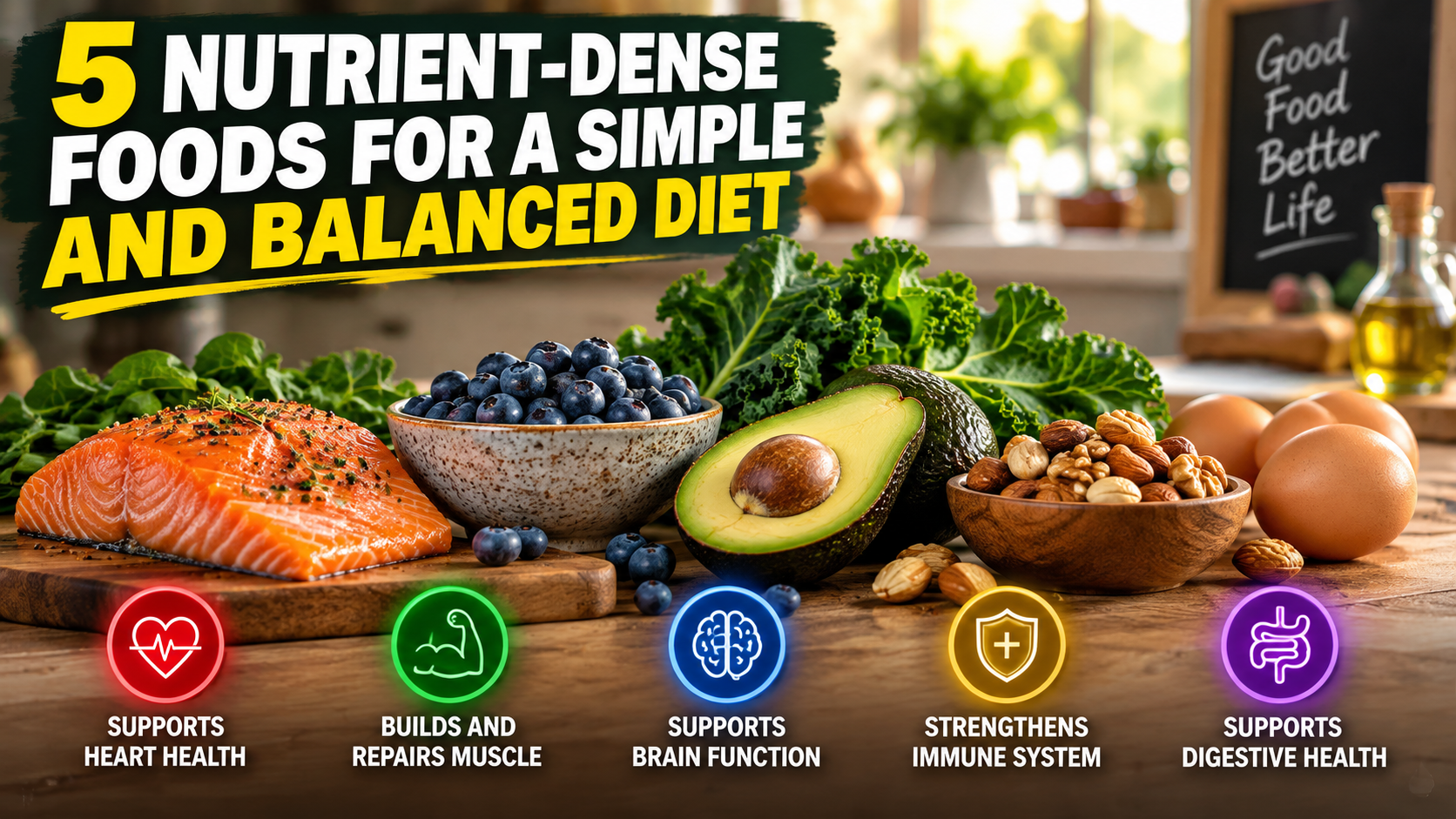
While no combination of five foods can literally provide every nutrient the human body needs, choosing a small group of nutrient-dense foods can help create a simple and nutritious foundation for a balanced diet.
The goal is not to identify five “perfect” foods or suggest eating only these foods. Instead, these examples demonstrate how ordinary foods can provide substantial amounts of protein, healthy fats, fiber, vitamins, minerals, and other beneficial compounds.
1. Eggs
Eggs are among the most nutrient-dense foods available.
They provide high-quality protein containing all nine essential amino acids, making them a complete protein source.
Eggs also provide important nutrients such as:
- Choline.
- Vitamin B12.
- Vitamin A.
- Selenium.
- Riboflavin.
- Other B vitamins.
Why Is Choline Important?
Choline is an essential nutrient involved in several important processes in the body, including normal brain function, cell structure, and the production of acetylcholine, a neurotransmitter involved in nervous-system function.
Eggs are one of the most concentrated dietary sources of choline.
However, eggs should not be considered a complete nutritional solution by themselves.
An egg contains roughly 6 grams of protein, so someone trying to meet a high daily protein target would need to consume many eggs if eggs were their only protein source.
A varied diet makes it much easier to obtain adequate protein and other nutrients without relying excessively on one food.
What About Cholesterol in Eggs?
Eggs contain dietary cholesterol, but dietary cholesterol does not affect blood cholesterol levels in exactly the same way for everyone.
For many healthy people, moderate egg consumption can fit within a balanced diet.
However, people with high cholesterol, cardiovascular disease, diabetes, or other individual risk factors should discuss their dietary choices with a healthcare professional.
2. Salmon and Sardines
The second group consists of fatty fish such as salmon and sardines.
These foods provide high-quality protein as well as the long-chain omega-3 fatty acids EPA and DHA.
Omega-3 fatty acids play important roles in normal cardiovascular, neurological, and cellular function.
Fatty fish also provide nutrients such as:
- Vitamin B12.
- Vitamin D.
- Selenium.
- High-quality protein.
Sardines can be particularly practical because they are often less expensive than salmon and are available in many parts of the world.
Why Are Omega-3 Fatty Acids Important?
EPA and DHA are essential components of cell membranes and have important biological functions.
Regular consumption of fish as part of a healthy dietary pattern has been associated with cardiovascular benefits.
However, it is important not to exaggerate the effects of omega-3 fatty acids.
Eating salmon or sardines does not guarantee protection from heart disease, and fish should be considered part of an overall healthy eating pattern rather than a standalone treatment.
3. Dark Green Vegetables
The third group includes dark green vegetables such as:
- Spinach.
- Kale.
- Broccoli.
- Brussels sprouts.
- Other leafy greens.
- Other cruciferous vegetables.
You do not need to buy an expensive or exotic vegetable.
The best choice is often the nutritious vegetable that is affordable, available, and easy for you to eat regularly.
These foods can provide:
- Fiber.
- Vitamin C.
- Vitamin K.
- Folate.
- Carotenoids.
- Magnesium.
- Potassium.
- Other beneficial plant compounds.
Why Is Fiber Important?
Fiber plays an important role in digestive health and can contribute to:
- Regular bowel movements.
- Greater fullness after meals.
- Healthy blood glucose regulation.
- A healthy gut microbiome.
- Cardiovascular health.
Daily fiber needs vary depending on age, sex, and total energy intake. Many adults are advised to consume roughly 25–38 grams of fiber per day, although individual needs differ.
You do not have to obtain all of this fiber from vegetables.
Fruits, legumes, whole grains, nuts, and seeds can also make important contributions.
4. Avocado
Avocado is another nutrient-dense food that can complement a balanced diet.
It is particularly rich in monounsaturated fat and also provides fiber, potassium, folate, vitamin E, and other nutrients.
The combination of healthy fats and fiber can make avocado a satisfying addition to meals.
Why Are Healthy Fats Important?
Dietary fat is essential for normal health.
Fat helps the body absorb fat-soluble vitamins such as vitamins A, D, E, and K and plays important roles in cell membranes and other biological processes.
Replacing some sources of saturated fat with unsaturated fats can be beneficial for cardiovascular health.
However, avocado is relatively calorie-dense, so portion size can still matter depending on someone’s overall calorie needs and goals.
A nutritious food can still contribute to excess calorie intake when consumed in very large quantities.
5. Lentils
The fifth food is lentils.
Lentils are legumes that provide a combination of:
- Plant protein.
- Fiber.
- Iron.
- Folate.
- Magnesium.
- Potassium.
- Other micronutrients.
Lentils do not contain the same complete amino-acid profile as animal proteins such as eggs or fish, but they can still make a valuable contribution to total protein intake.
Combining different plant foods throughout the day can help provide a broad range of amino acids.
There is also no need to avoid lentils simply because they contain naturally occurring compounds sometimes described as “antinutrients.”
Some compounds can reduce the absorption of certain minerals, but normal food preparation and a varied diet can help minimize these concerns.
How Can You Include Lentils in a Meal?
Instead of making lentils the entire meal, you could combine a moderate portion with vegetables and a protein source such as fish.
For example:
Half the plate: vegetables
A portion: salmon or sardines
Another portion: lentils
Optional healthy fat: avocado
This creates a meal containing protein, fiber, healthy fats, vitamins, minerals, and other beneficial compounds.
The Bigger Lesson: Healthy Eating Does Not Have to Be Complicated
The most important lesson is not that these five foods are “the best foods.”
They are simply examples of nutrient-dense foods that can contribute to a healthy dietary pattern.
You do not need expensive powders, exotic ingredients, or a long list of supplements to eat well.
A balanced diet can be built around ordinary foods that are widely available.
The foundation can include:
- Vegetables and fruits.
- Legumes.
- Fish or other protein sources.
- Eggs.
- Whole grains.
- Nuts and seeds.
- Healthy sources of unsaturated fats.
The exact combination can change depending on your culture, budget, preferences, nutritional requirements, and health goals.
Food Is More Than Just Calories
Food provides energy, but it also supplies protein, essential fatty acids, vitamins, minerals, fiber, and thousands of naturally occurring compounds.
These nutrients interact with biological processes throughout the body.
That is why the overall quality and variety of your diet matter.
At the same time, no individual food has magical properties.
Eating one “superfood” does not compensate for an otherwise poor diet.
What matters most is the overall pattern you maintain over months and years.
A Simple Way to Build Your Meals
Instead of trying to make every meal perfect, focus on including several nutritional components.
A simple meal could contain:
Protein
Eggs, fish, chicken, yogurt, beans, lentils, or another protein source.
Vegetables or Fruit
Choose fresh or minimally processed options that you enjoy.
Fiber-Rich Carbohydrates
Lentils, beans, whole grains, potatoes, oats, or fruit can all contribute.
Healthy Fats
Avocado, olive oil, nuts, seeds, or fatty fish can provide unsaturated fats.
This approach gives you flexibility without making nutrition unnecessarily complicated.
Final Thoughts
There is no single food that can provide everything your body needs.
However, nutrient-dense foods such as eggs, salmon or sardines, dark green vegetables, avocado, and lentils can provide a wide variety of essential nutrients and fit into a balanced eating pattern.
The goal should not be to eat perfectly.
Instead, build a diet that is nutritious, varied, affordable, enjoyable, and sustainable.
Healthy eating does not have to be complicated.
Sometimes the most useful nutritional strategy is simply to return to nutritious foods that have been available for generations and build consistent habits around them.
Frequently Asked Questions
Can five foods provide all the nutrients I need?
Not reliably. No simple five-food combination should be considered nutritionally complete for everyone. Nutritional needs vary, and dietary variety helps reduce the risk of deficiencies.
Are eggs a healthy source of protein?
Yes. Eggs provide complete, high-quality protein along with several vitamins and minerals, including choline and selenium.
Are sardines as nutritious as salmon?
Sardines and salmon are both nutrient-dense fatty fish and provide high-quality protein and omega-3 fatty acids. Their exact nutrient profiles differ.
How much fiber should I consume?
Many adults need approximately 25–38 grams of fiber per day, although individual requirements vary. Fiber can come from vegetables, fruits, legumes, whole grains, nuts, and seeds.
Is avocado good for a healthy diet?
Yes. Avocado provides mostly monounsaturated fat along with fiber, potassium, folate, vitamin E, and other nutrients. Because it is calorie-dense, portion size can still matter depending on your goals.
Are lentils a good source of protein?
Yes. Lentils provide substantial plant protein as well as fiber, folate, iron, magnesium, and other nutrients. They can be combined with other foods to create a varied protein intake.
Do I need expensive “superfoods” to be healthy?
No. A healthy diet can be built from ordinary, minimally processed foods. Expensive or exotic foods are not automatically more nutritious than accessible foods such as vegetables, legumes, eggs, fish, fruits, and whole grains.