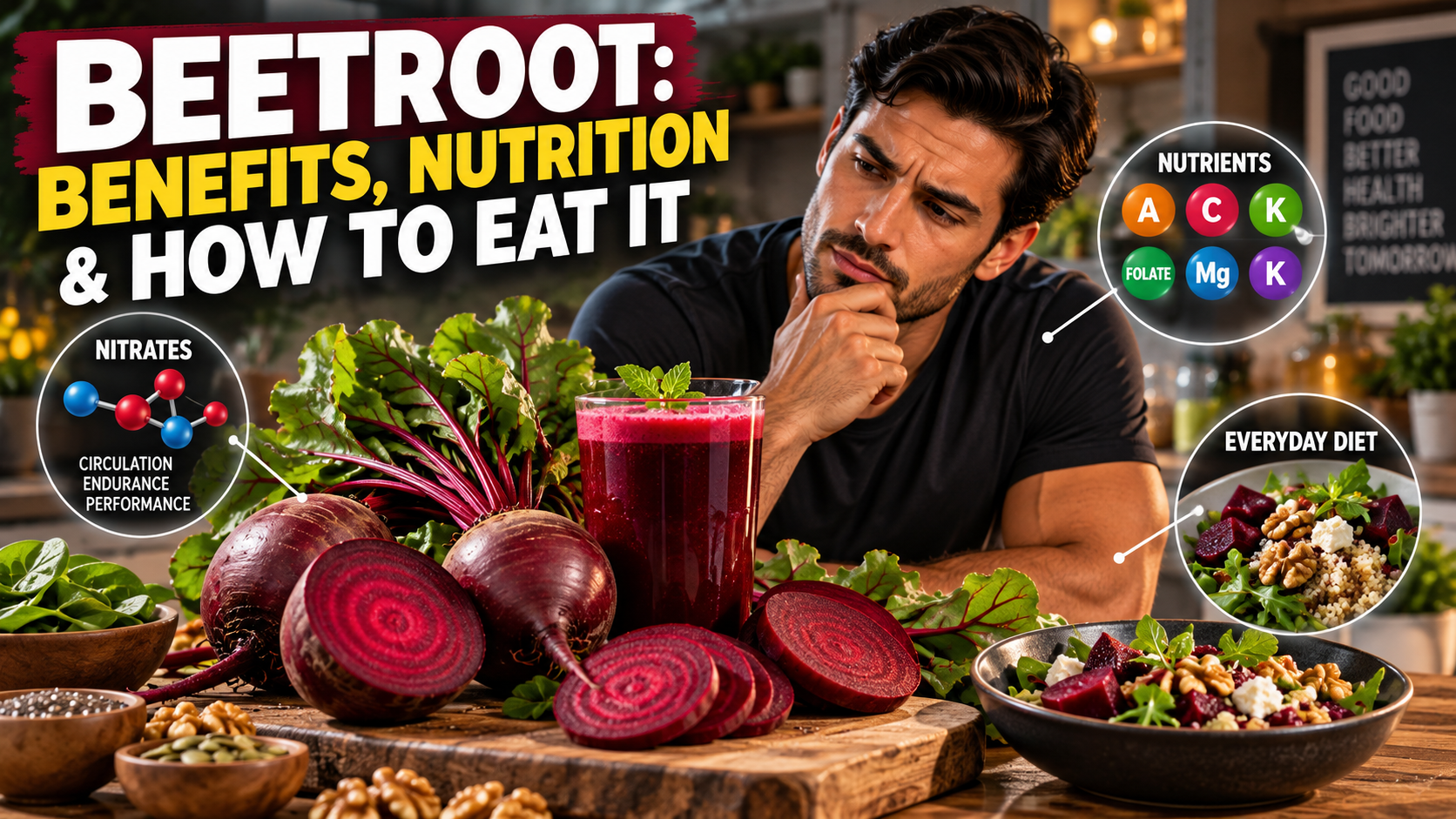
If you knew how many nutritional benefits beetroot can offer, you might want to include it in your diet more often.
Beetroot is known for its intense red-purple color, but behind that color are several nutrients and plant compounds that have attracted considerable scientific interest.
You may have heard that beetroot can improve blood pressure, support exercise performance, help with circulation, or even “cleanse” the liver. But how much of this is actually supported by evidence?
Let’s take a closer look at what beetroot contains, what research suggests, and how you can incorporate it into a balanced diet.
What Makes Beetroot Interesting?
The nutritional value of beetroot comes from a combination of vitamins, minerals, fiber, nitrates, and naturally occurring plant compounds.
One of its most studied components is dietary nitrate. The body can convert nitrate into nitric oxide, a molecule involved in blood-vessel relaxation and blood flow.
This is one of the main reasons beetroot has received so much attention in nutrition and sports research.
Beetroot and Blood Pressure
One of the most studied potential benefits of beetroot is its relationship with blood pressure.
Beetroot contains naturally occurring nitrates. After consumption, some of these nitrates can contribute to the production of nitric oxide.
Nitric oxide helps blood vessels relax and widen. This can improve blood flow and, in some people, may contribute to a modest reduction in blood pressure.
However, beetroot should not be considered a treatment or cure for hypertension.
High blood pressure is influenced by many factors, including body weight, physical activity, genetics, sodium intake, sleep, stress, and overall diet.
For someone with hypertension, beetroot can be part of a healthy eating pattern, but it should not replace prescribed medication or medical advice.
Beetroot and Exercise Performance
Beetroot has also become popular among athletes and physically active people.
The nitrate content may increase nitric oxide availability, which can influence blood flow and the efficiency of oxygen use during exercise.
Some studies have found improvements in certain measures of endurance and exercise efficiency after consuming beetroot or beetroot juice, particularly in some endurance activities.
The effects are not identical for everyone, however, and beetroot is not a substitute for proper training, nutrition, hydration, and recovery.
Antioxidants and Plant Compounds
Beetroot contains several naturally occurring compounds, including betalains.
Betalains are pigments responsible for much of beetroot’s characteristic color. They have antioxidant and anti-inflammatory properties in laboratory and experimental research.
Beetroot also contains other plant compounds that contribute to its overall nutritional profile.
It is important, however, to distinguish between biological activity observed in laboratory studies and proven health outcomes in humans. Eating beetroot does not automatically prevent disease or eliminate inflammation.
Beetroot and Heart Health
Because beetroot can contribute nitrates, potassium, fiber, and various plant compounds, it can fit well into a heart-healthy eating pattern.
Its potential effects on blood pressure and blood-vessel function are among the reasons researchers continue to study it.
But cardiovascular health depends on the overall dietary pattern rather than a single food.
A diet rich in vegetables, fruits, legumes, whole grains, nuts, seeds, and appropriate sources of protein generally provides a much broader range of nutrients and beneficial compounds.
Does Beetroot “Detox” the Liver?
This is where it is important to separate popular claims from established science.
The liver already has sophisticated systems for processing and eliminating many substances from the body. There is no need for a particular food or juice to “clean” the liver in the way that detox advertisements often suggest.
Beetroot contains antioxidants and other plant compounds that may interact with normal metabolic processes, and research continues to investigate these effects.
However, there is not enough evidence to claim that eating beetroot literally detoxifies the liver or removes toxins from the body.
For liver health, the fundamentals remain much more important: maintaining a healthy weight, limiting excessive alcohol consumption, exercising regularly, and following an overall nutritious diet.
Beetroot and Digestive Health
Beetroot also provides dietary fiber.
Fiber is important for normal digestion and can contribute to regular bowel movements. Certain types of dietary fiber can also be fermented by gut microorganisms, producing compounds that interact with the intestinal environment.
This is another reason why vegetables can be an important part of a healthy diet.
However, beetroot is only one possible source of fiber. Eating a variety of vegetables, fruits, legumes, and whole grains provides a much wider range of fibers and plant compounds.
What Nutrients Does Beetroot Provide?
Beetroot provides several useful nutrients, including:
- Folate
- Vitamin C
- Potassium
- Manganese
- Dietary fiber
- Naturally occurring nitrates
- Betalains and other plant compounds
The exact nutritional content depends on the amount consumed and how the food is prepared.
Beetroot can contribute to a nutritious diet, but it should be viewed as one food among many rather than a complete nutritional solution.
Raw, Cooked, or Juiced?
There is no single preparation method that is automatically the best for everyone.
Raw beetroot can provide fiber and can be added to salads or other meals.
Cooked beetroot can be easier for some people to digest and can be incorporated into a variety of dishes.
Beetroot juice is different because much of the physical structure of the food has been removed or broken down. Depending on how it is prepared, juice may provide less fiber than eating the whole vegetable.
For everyday nutrition, eating beetroot as part of a complete meal can be a simple way to include it in your diet.
How Much Beetroot Should You Eat?
There is no universally established daily dose of beetroot that everyone needs.
The appropriate amount depends on the individual’s overall diet, nutritional needs, preferences, and health circumstances.
You do not need to eat beetroot every day to have a healthy diet.
Instead, think about variety. Rotate different vegetables and plant foods throughout the week so your diet provides a broad range of nutrients and plant compounds.
Why Does Beetroot Turn Urine Red?
There is one harmless effect that surprises many people.
After eating beetroot, some people notice that their urine becomes pink, red, or reddish-purple.
This is known as beeturia and is caused by beetroot pigments being excreted from the body.
It can also affect stool color.
For many people, this is temporary and harmless.
However, if red urine occurs without a clear connection to eating beetroot, or if it is accompanied by pain or other symptoms, it should not automatically be assumed to be beeturia. Medical evaluation may be appropriate.
Is Beetroot Toxic?
For most people, beetroot is a normal food that can be safely included in a balanced diet.
One consideration is that beetroot contains oxalates, compounds that may be relevant for people who have certain types of kidney stones or specific medical conditions.
People with kidney disease, a history of kidney stones, or other medical concerns should discuss dietary choices with an appropriate healthcare professional.
The Bigger Picture
Beetroot is an interesting and nutritious vegetable, but it does not need to be treated as a miracle food.
Its nitrates may support nitric oxide production and blood-vessel function. Its plant compounds provide antioxidant activity, and its fiber contributes to a healthy diet.
At the same time, no single food can replace the fundamentals of good health.
A balanced diet, regular physical activity, adequate sleep, healthy body weight, and appropriate medical care all matter far more than adding one particular vegetable to your routine.
The most useful way to think about beetroot is simple: it is one nutritious option that can be part of a varied and balanced diet.
You do not need expensive supplements, complicated “detox” programs, or exotic foods to improve your nutrition.
Sometimes, the simplest foods can provide plenty of valuable nutrients.
Beetroot is a good example.